
Choosing who builds your gate is as important as choosing the gate itself. A good set of questions upfront saves you from surprises later, whether from a quote whose cost balloons once concreting gets added, or a design that doesn’t suit your property.
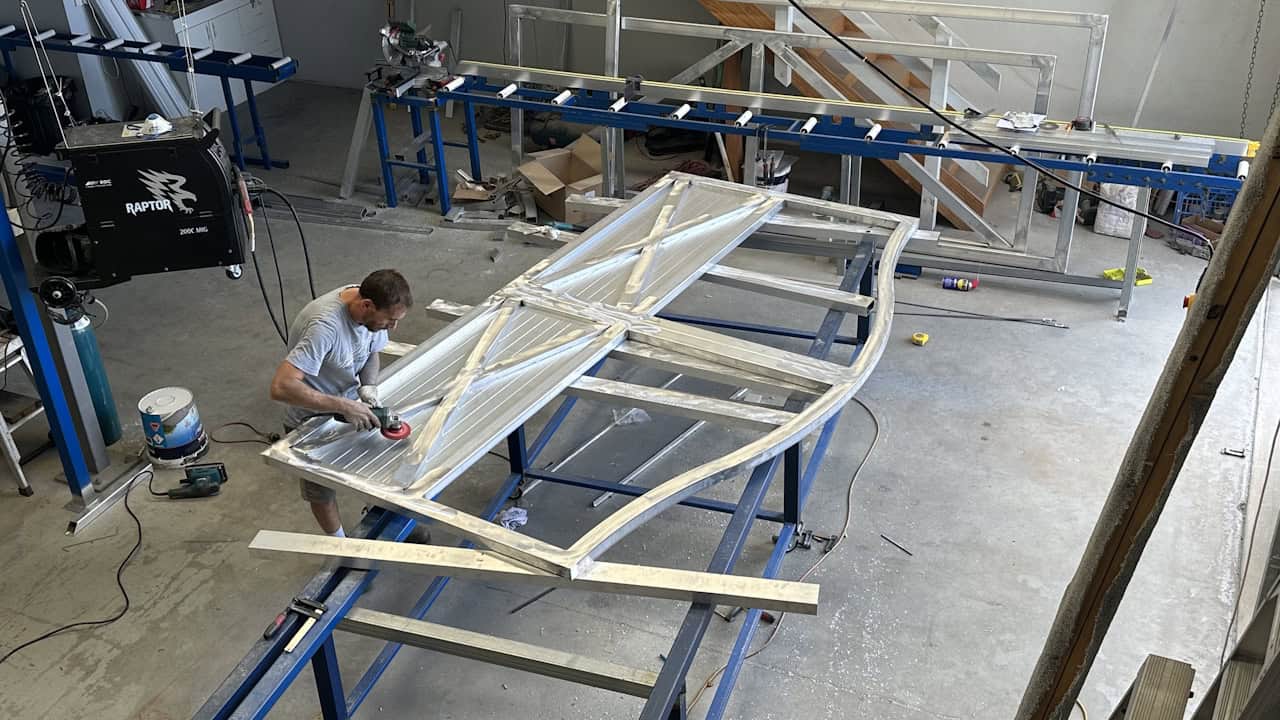
Over the 16+ years I’ve been installing automatic gates, my experience shows that when a customer is considering a new gate system, most questions will fall into one of two areas:
Let’s start with the more enjoyable side first: the choices that will shape how your gate looks and works day to day…
Part 1: What do you actually want built?
These are the design and spec questions I’d recommend thinking about, or gathering answers to (even rough ones) as you start getting quotes.
What style of gate would you prefer?
While sliding and swing gates might be seen as the “base” styles, there are many variations and possibilities within those types, such as a cantilever gate, and different types of gates will suit different sites. A sliding gate needs a run of clear fence line to travel along; a swing gate needs clear arc space to open into. If you’re not sure which best fits your property, or what options you may have, that’s the first thing to ask your installer.
What design and privacy level are you after?
Most people picture one of the standard styles (slats, louvred, or full block-out), but a lot of what we build blends two or three of these, or starts from a client’s own sketch, rather than a catalogue option. Some clients bring a Pinterest board or a photo of a gate they liked, or even just a rough idea sketched on a napkin!
Automatic or manual, and is solar worth considering?
Automation is the obvious upgrade, adding convenience and, for some, security. Manual, solar, or mains-powered are your main options, but which one’s right often comes down to a practical site detail rather than preference. I’ll come back to that below.
Do you need extra security or access control?
Keypads and intercoms aren’t always a separate job. They can be factored into the gate installation if you raise them early enough. If this question is left until after the design and build is locked in, you may find yourself retrofitting instead, and that limits your options.
What colour do you want?
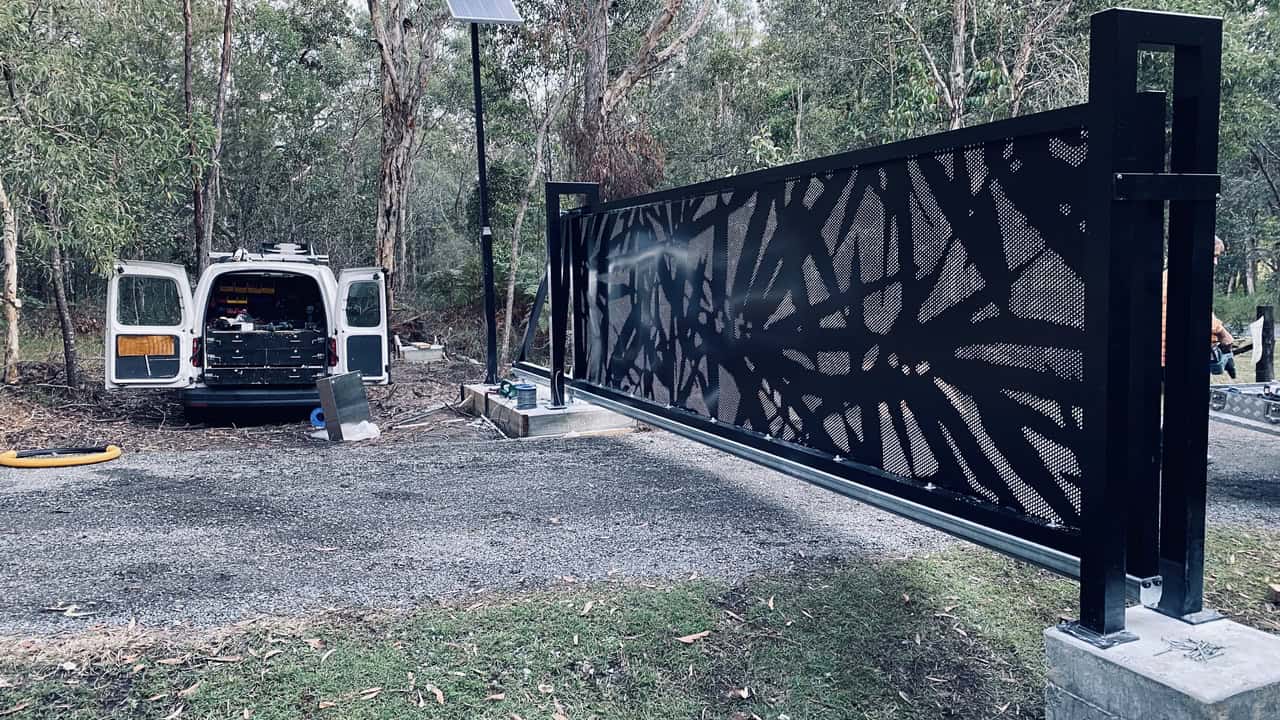
With over 50 powder-coat colours available, this is one of the more enjoyable decisions. But colour reads differently outdoors than it does on a screen or a small swatch. A good installer can point you to a colour chart you can see in person or check against your existing fence line before you commit.
Part 2: What else to ask before you sign
The questions above cover what you want. These ones cover the practical side of getting your gate designed, made and installed properly. They’re also the ones I find people most often wish they’d asked sooner.
What’s the realistic time frame from deposit to installation?
Custom gate fabrication with Alpha Gate Automation typically takes four to eight weeks from deposit to installation. Ask for a real range, not a best-case estimate, and ask what happens if it changes.
Will the new gate match our existing fence and colour scheme?
This is different from picking a colour fresh. If you’re extending or replacing part of an existing fence line, ask specifically whether the installer will match what’s already there, and how close a colour match you can realistically expect.
Does the quote include concreting and the power run, or is that a separate cost?
Track concreting and running power to the gate location are commonly treated as separate costs, and usually the customer’s responsibility to arrange, rather than being bundled into the gate quote. Ask what’s covered and what isn’t, so there are no surprises once the job’s underway.
Will someone visit and measure on site before the quote is final, or is it an estimate?
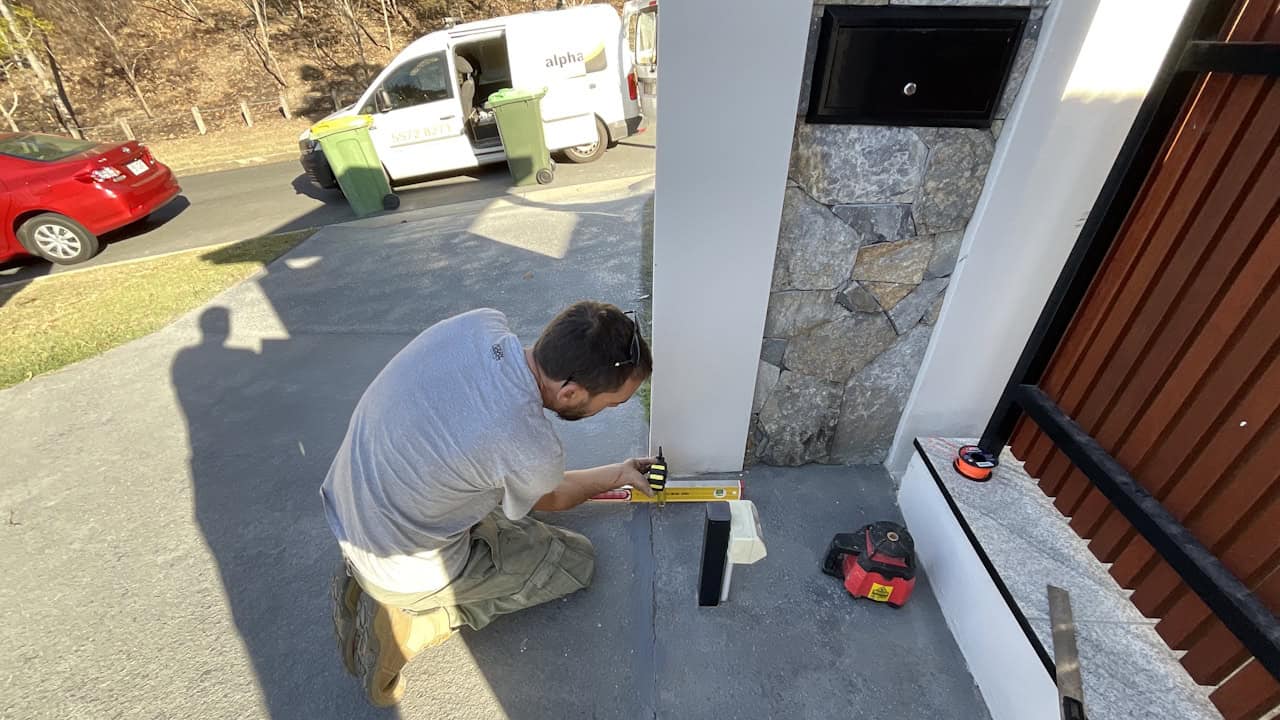
A site visit before a final quote is standard practice. It protects both sides, confirming the quote reflects your actual site, not a rough guess from photos or a phone conversation.
Does your site’s slope or available space rule out any gate types?
A sloped driveway can limit sliding-gate options, and a swing gate needs clear space to open into that some sites simply don’t have. This is worth asking before you fall in love with a particular style.
Is power already available at the gate location, or will it need to be run?
This is often the real deciding factor behind solar versus mains-powered automation, and comes down to something people don’t initially think of: whether there is already power at the gate location. If there isn’t, solar often isn’t just the eco-friendly option, it’s the only practical one, especially in rural areas.
Can your existing gate be reused or automated, or does everything need replacing?
If you already have a manual gate you’re happy with, ask whether it’s a candidate for automation rather than full replacement. It won’t always be the answer, but it’s worth ruling in or out early. Our guide on how to tell if it’s worth repairing or replacing can help you weigh that up before you call anyone.
Is the installer licensed and insured, and does the motor’s warranty match the gate’s?
Ask for proof of licensing and insurance outright rather than taking it on trust (you can see ours here). Then check the warranty side: the gate build and the automation components often carry separate terms, and the motor and moving parts are usually the more likely of the two to need attention first. Get both in writing before you sign.
A few more questions to consider asking:
The short version
Good questions asked early save you time, money, and a gate that doesn’t quite fit the site. If you’d like to see how our custom gate process works, step by step, it’s all laid out there. Or if you’re ready to start that conversation, get in touch and the Alpha Gate Automation team will walk through all of this with you, properly, on your property.
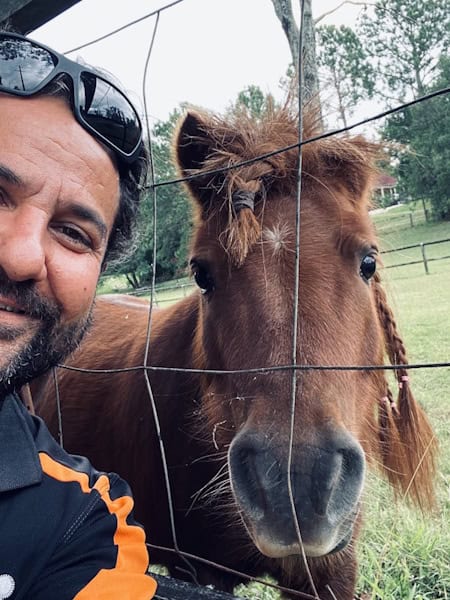
Hi, I’m Leo, founder and owner of Alpha Gate Automation, the custom gate company. Along with my team, I’ve been designing, manufacturing, and installing custom gates and intercom systems for residential, commercial, and rural properties across the Gold Coast, Tweed Shire and South East QLD, for over 16 years.